
Race planning / Practice / Packing / Planned intake
Race-day fueling is more than choosing a carbohydrate target. The complete plan connects the event, expected time, products, bottles, timing, packing, practice, and final review. BonkGuard keeps those pieces together while leaving the athlete in control of targets and product choices.
1. Define the race
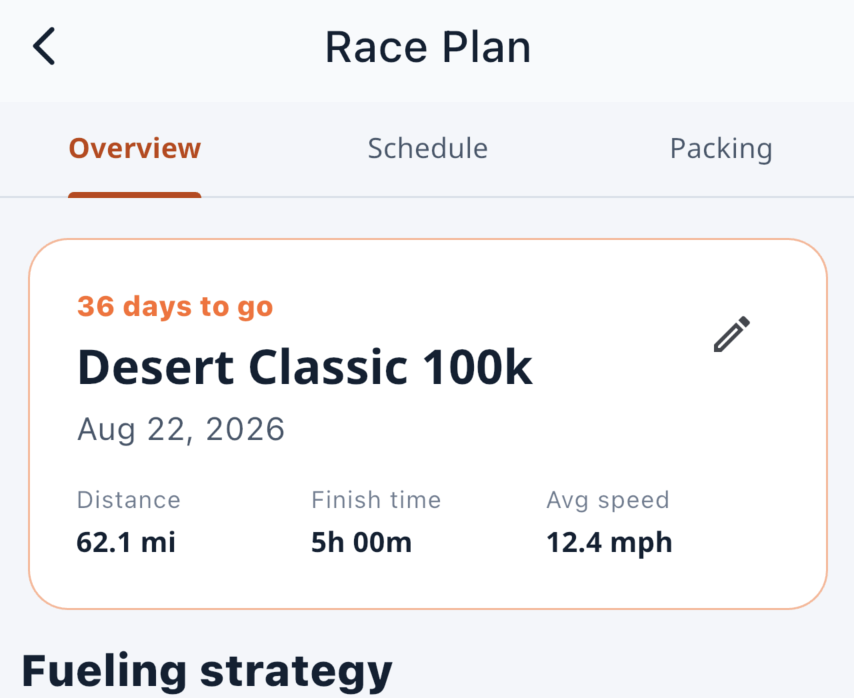
Start with the race name, date, distance, and expected finish time. Expected finish time turns the event into a practical duration, while distance and time provide planned average speed. That context makes it possible to estimate totals and build a schedule for the full event.
- Use a realistic finish-time estimate rather than an aspirational best case.
- Review the distance units and event date.
- Remember that planned average speed is context, not a pacing guarantee.
2. Review editable targets
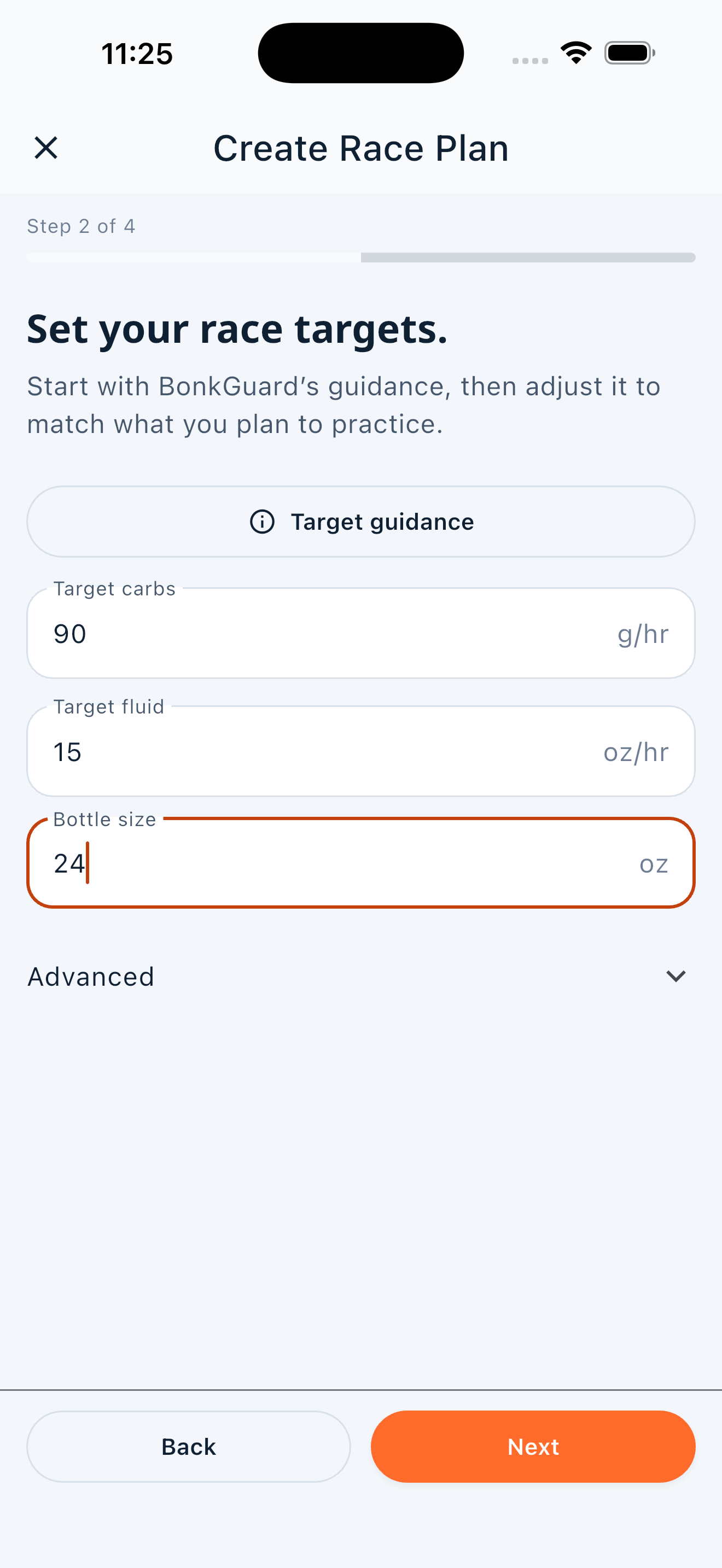
BonkGuard provides practical carbohydrate and hydration guidance, but the targets remain editable. Sodium is available as an optional advanced target. Individual needs vary with experience, tolerance, event demands, intensity, and conditions, so review the guidance instead of treating one number as mandatory.
3. Choose the products and bottles you will carry
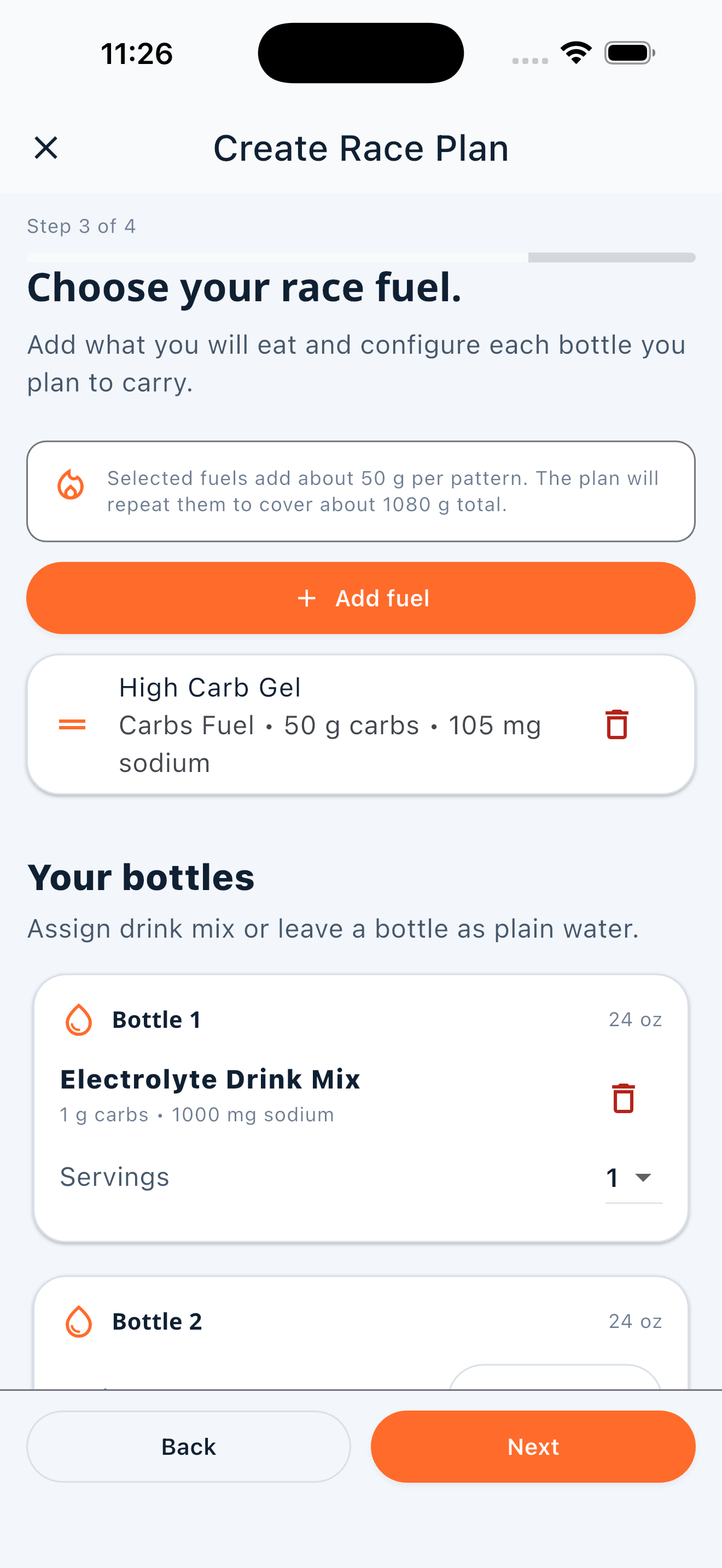
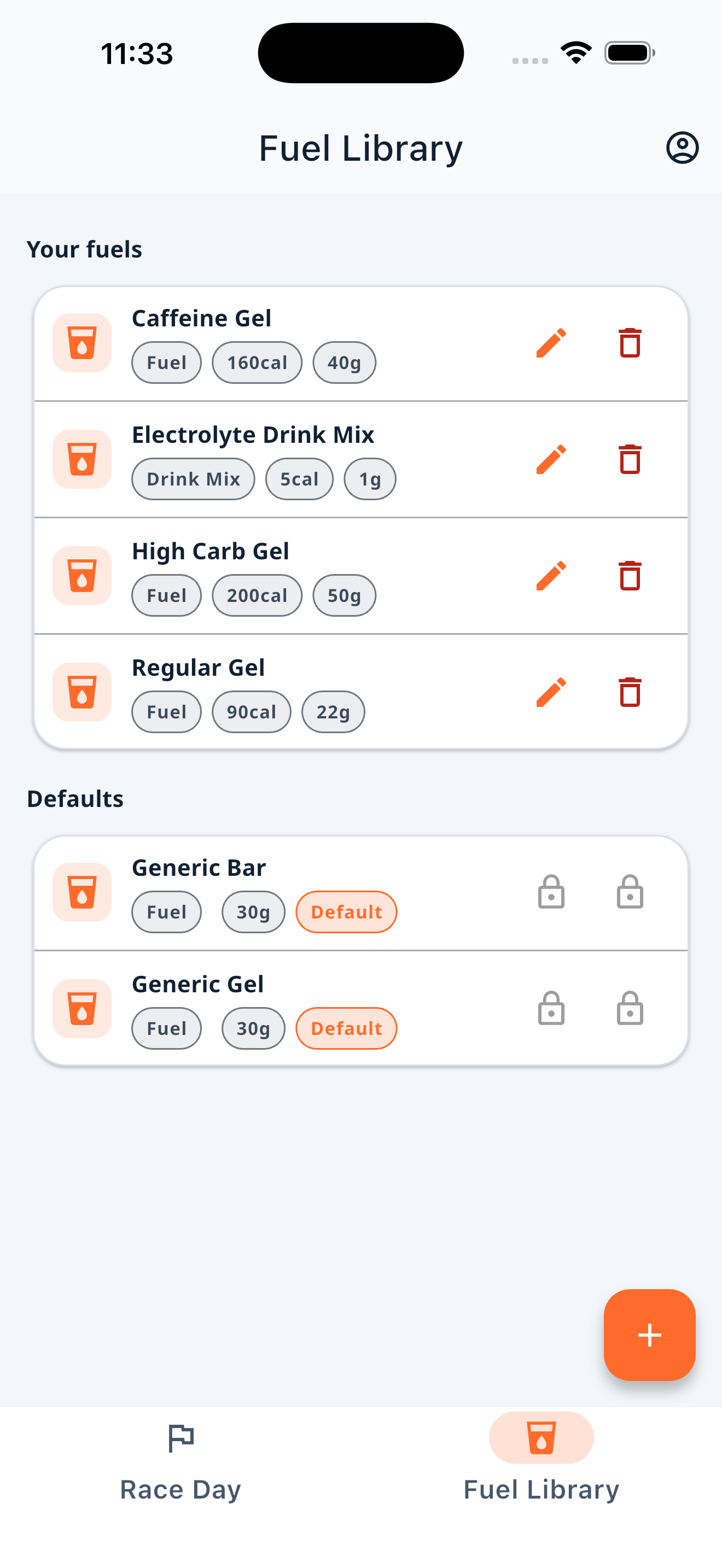
Select and order familiar foods, gels, chews, and drink mixes from the Fuel Library. Configure bottles and preparation so the race plan reflects the products and quantities you expect to have available. Race day is not the time to discover that a product, serving size, or bottle mix is difficult to tolerate.
- Check serving sizes and product details.
- Account for carbohydrate and sodium from drink mixes.
- Review caffeine across all selected products.
- Match the plan to what can be carried, refilled, or collected at aid stations.
4. Review Planned intake and the Schedule
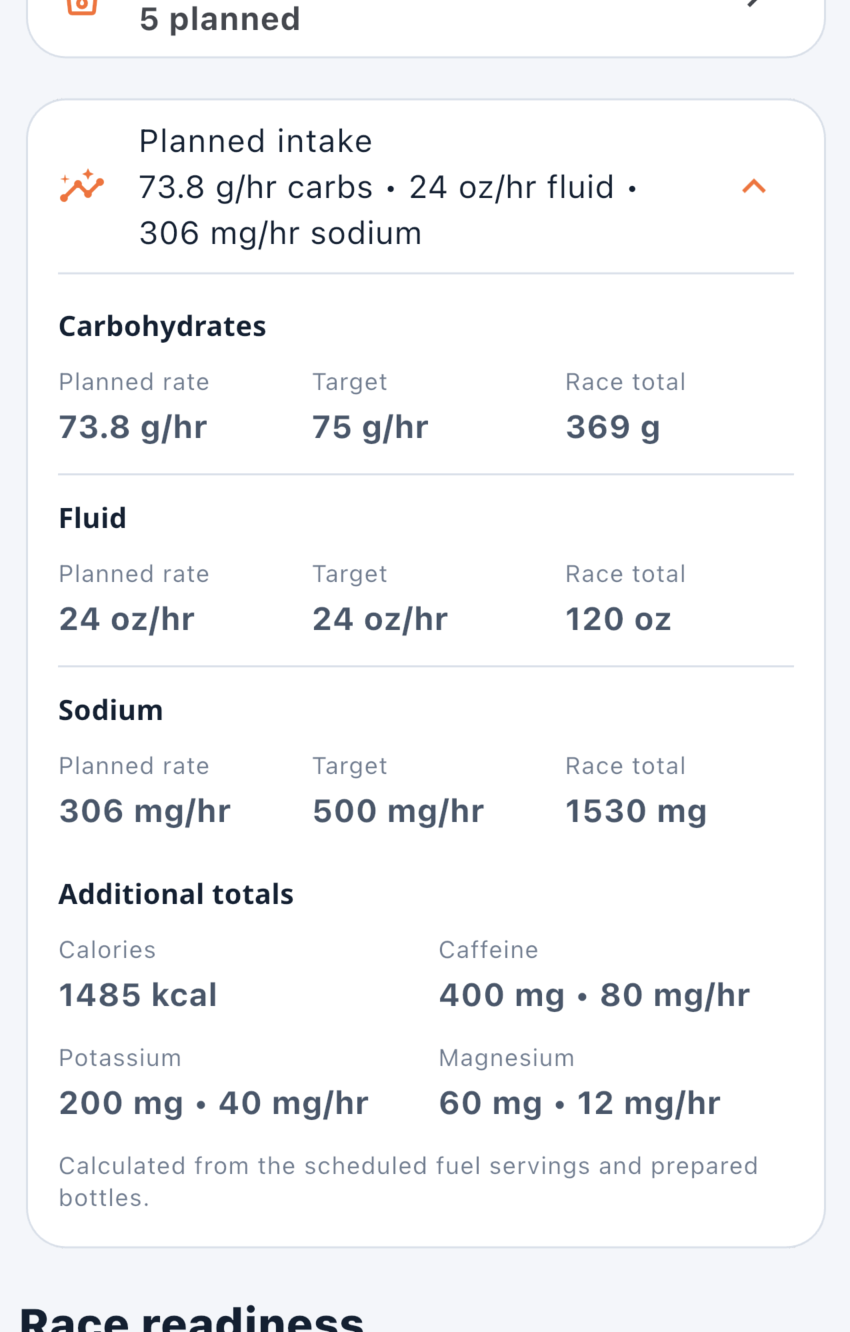
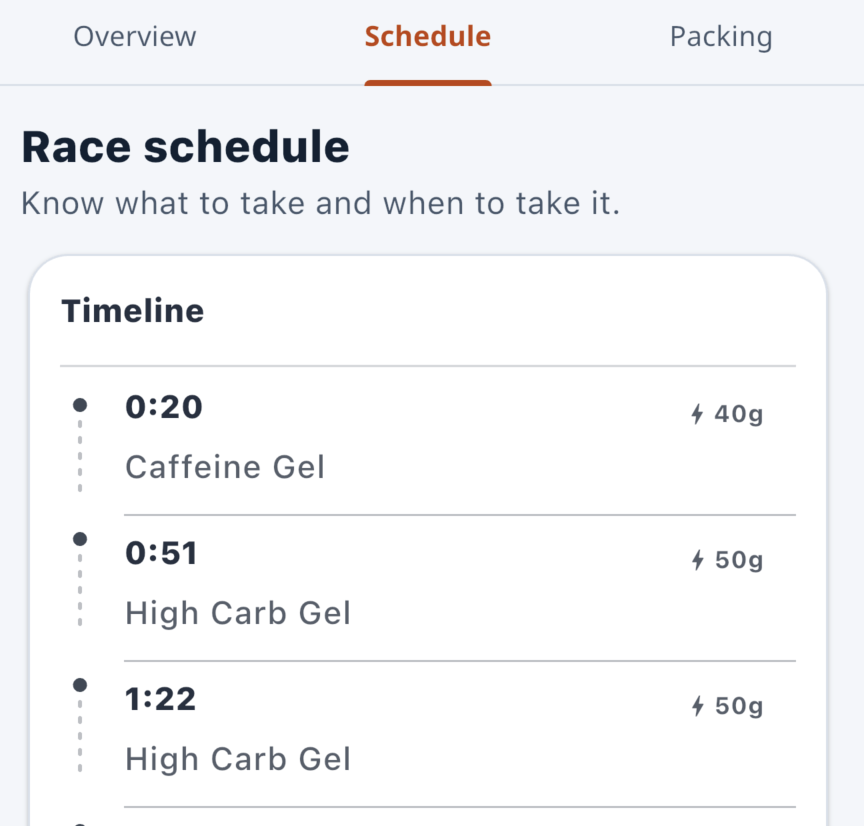
BonkGuard generates a timed fuel and hydration Schedule from the selected products and prepared bottles. Overview compares carbohydrate, fluid, and optional sodium targets with Planned intake, then expands to race totals for carbohydrates, fluid, sodium, calories, caffeine, potassium, and magnesium.
Read the Schedule from start to finish. Check that servings occur at practical moments, bottle timing makes sense, and the plan remains understandable when the event becomes demanding.
5. Practice this plan
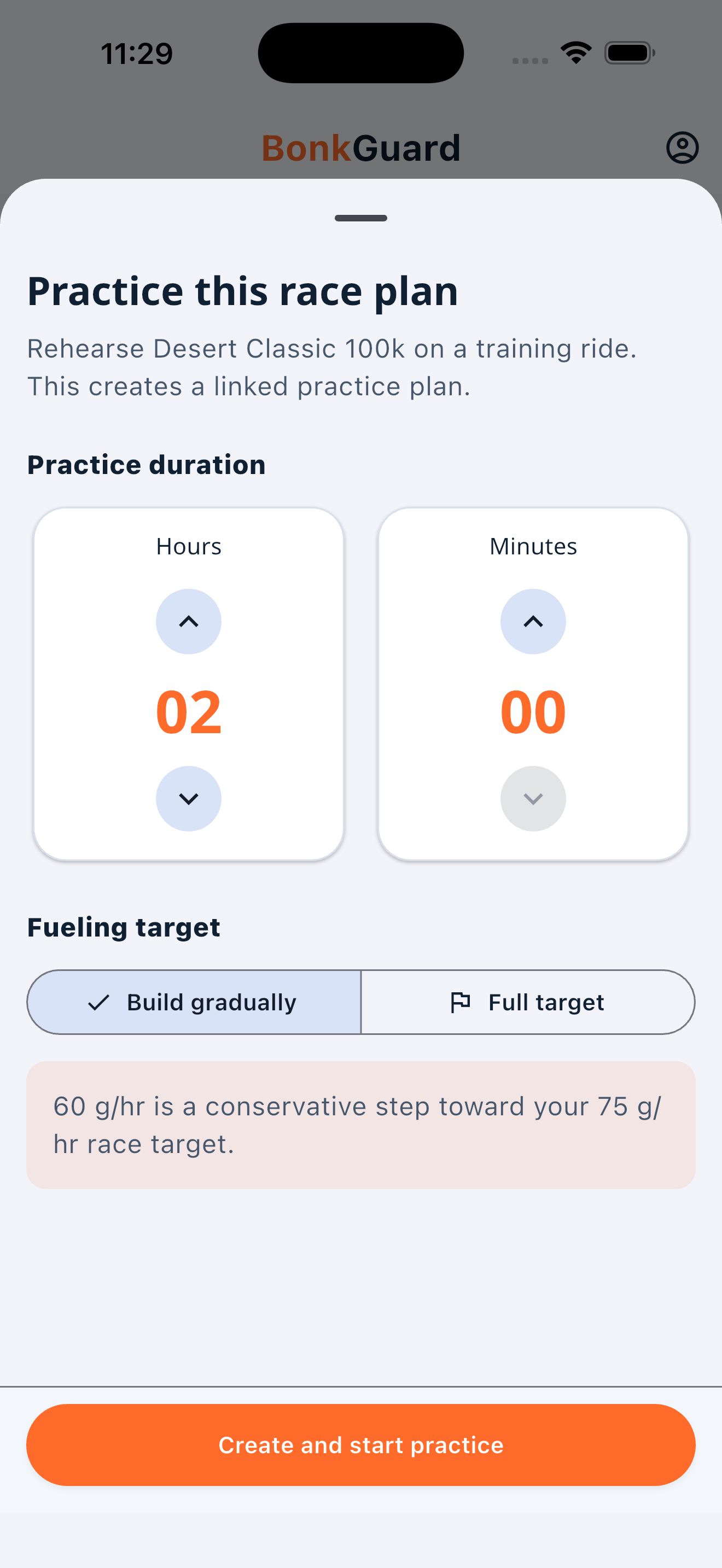
Create a linked shorter practice plan for selected training sessions. You can rehearse the full race target or start with a more conservative progression. The purpose is deliberate race preparation: learn whether the products, bottle setup, timing, and carrying method feel practical before the event.
Not every ride needs race-level fueling. Easy or short training sessions may have different needs. Use race-plan practice when the workout can teach you something useful about the event strategy.
6. Review Packing and get Race Ready
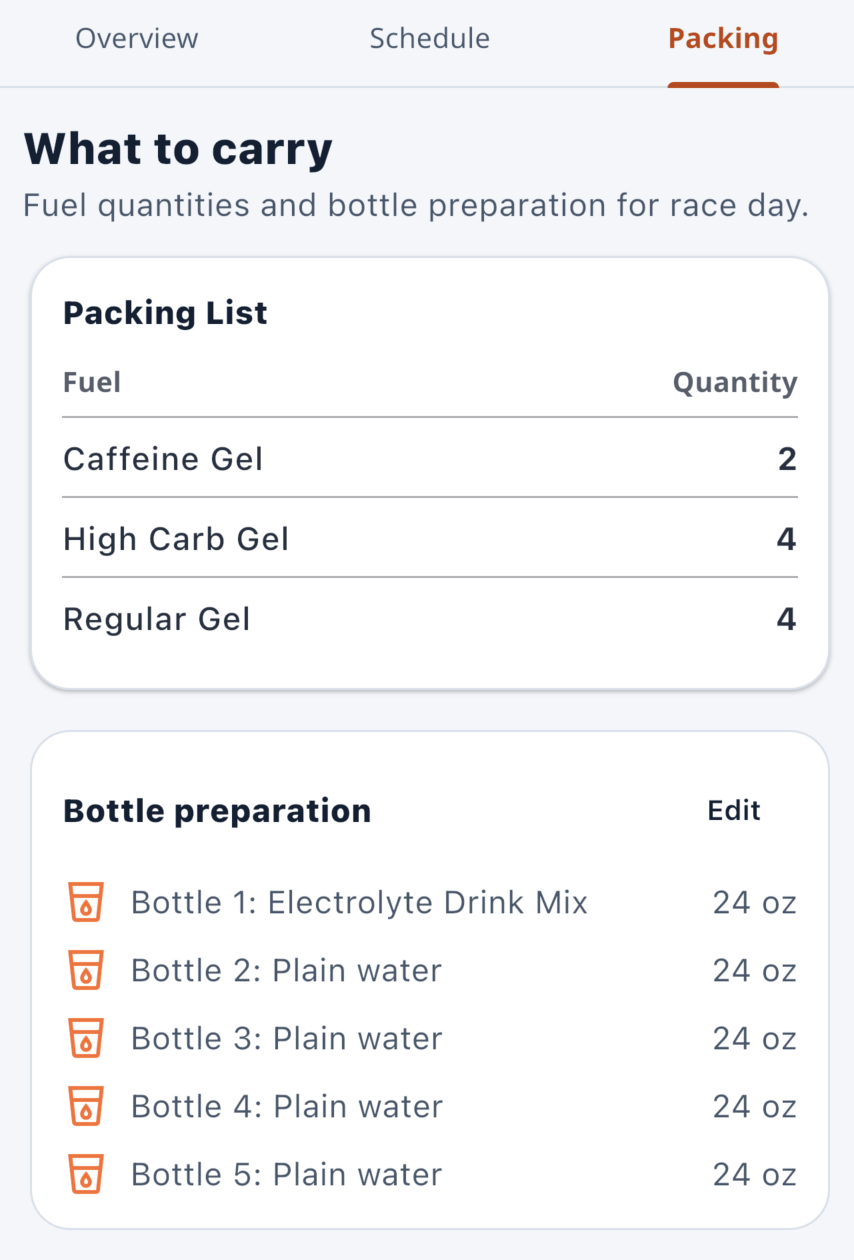
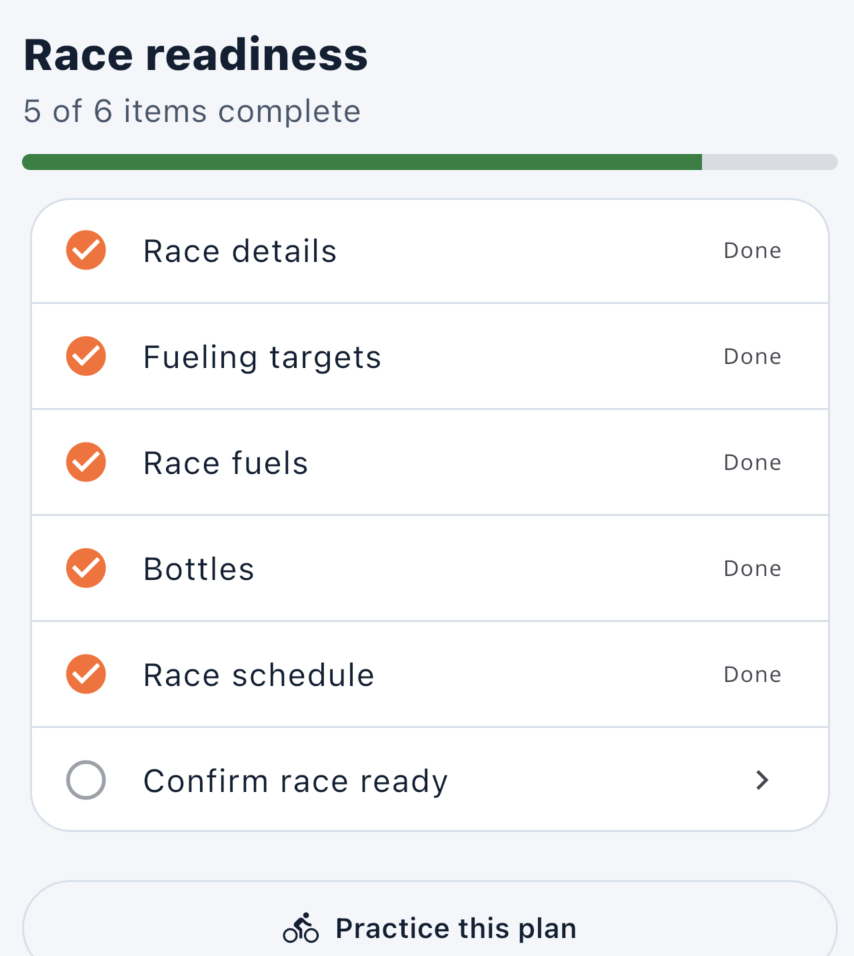
Open Packing to review fuel quantities and bottle preparation. Check the readiness items across race details, targets, fuel, bottles, schedule, and athlete confirmation. Recommendations remain editable, and the athlete explicitly marks the plan Race Ready only after reviewing it.
- Count fuel servings and backup items.
- Label bottle contents and mix quantities.
- Check the Schedule against likely access and aid-station windows.
- Export the plan or compact stem-card reference where supported.
- Open reminders and the full-screen execution timeline when following the plan.
Final race-plan check
- Does the race context and expected finish time look realistic?
- Have you reviewed and intentionally set the targets?
- Are the selected products and bottles familiar and practical to carry?
- Does Planned intake make sense beside the targets and totals?
- Can you follow the Schedule and prepare everything in Packing?
- Have you practiced the important parts of the strategy?
- Are you satisfied enough to mark the plan Race Ready?
Build, practice, and lock in the plan
Use BonkGuard to move from event details to a race plan you can review, pack, practice, and follow.